MathHero: Math Games for Kids
- 4.6
- Rating
- 1.00M
- Installs
- Free
- Price

 Analysis by App-foxy
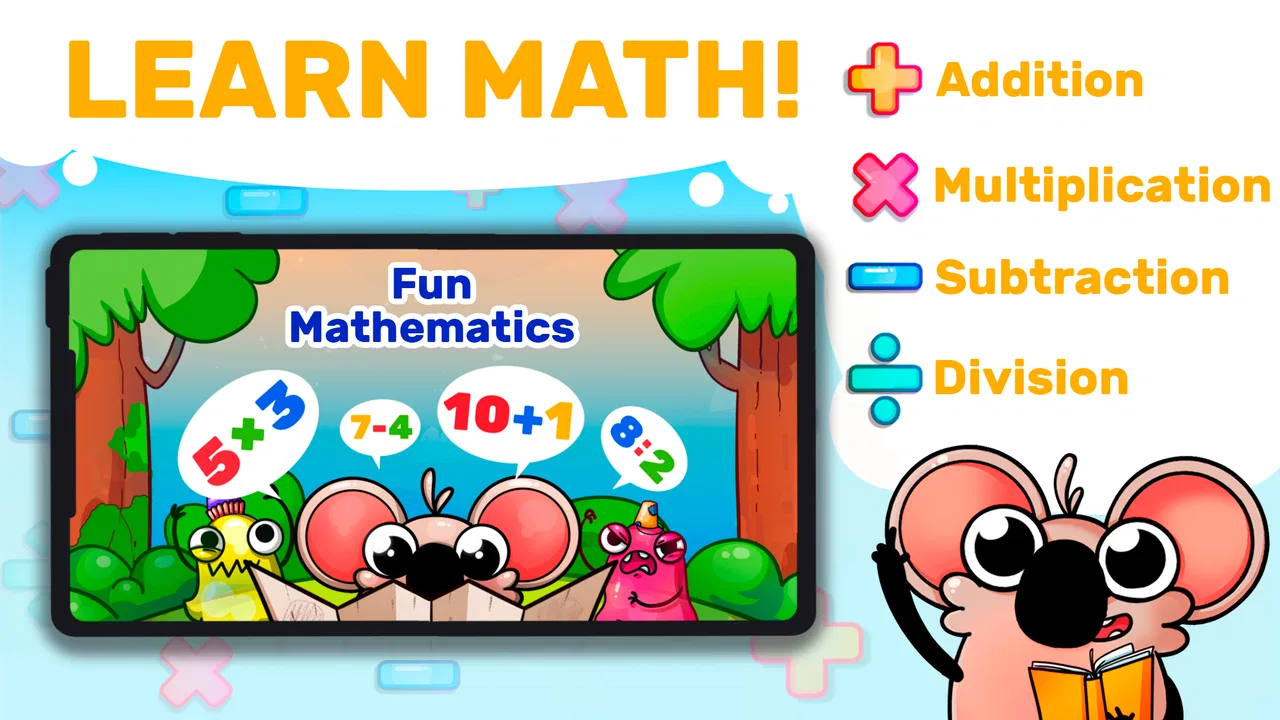
MathHero: Math Games for Kids is the kind of educational game I would put in front of a child who needs more practice but strongly dislikes the feeling of doing “extra schoolwork.” I found its appeal fairly easy to understand: it turns short math sessions into a game-like routine, so basic facts can be revisited without opening a workbook every time. That does not make it a complete math course, but it can be a useful practice companion when the goal is confidence, speed, and regular repetition.
The game comes from Speedymind LLC and is available for free, with optional in-app purchases ranging from $0.99 to $59.99 per item. It is rated for Everyone, runs on Android 7.0 or later, and its current version is 12.3.1. That combination makes it accessible to many families, although the free experience and the paid options should be considered separately before handing the device to a child.
What interested me most was not the first burst of novelty. Almost any colorful learning game can hold a child’s attention for a few sessions. The more important question is whether it remains useful once the newness disappears. In my experience, MathHero has a reasonable chance of earning a regular place in a child’s routine, but only when an adult keeps the sessions focused and accepts that it is practice rather than a replacement for explanation, homework support, or a teacher.
You May Also Like

 Blood Strike: 2.5 Anniversary
Blood Strike’s Loadouts Turn Every Drop Into a Tactical Gamble
A close look at Blood Strike’s custom loadouts: how fast access to signature weapons reshapes its battle royale rhythm, rewards preparation, and narrows the gap between fights.

 Pandora - Music & Podcasts
Pandora’s Music Is Easy to Start, but Harder to Recover
Pandora’s strength is its low-effort path from a seed to a station. Its weak spot is how much confidence it asks you to place in connection, setup, and quiet recovery.

 8 Ball Pool
 Is Built on Rivalries, Rematches, and Routine
A close look at the rivalries, rematches, shared routines, and unanswered safety questions that turn a quick pool match into a persistent mobile community.

 Samsung Music
’s Quiet Strength Is Playing What You Already Own
Its reach comes less from spectacle than from dependable access to a personal library. That simplicity is both the app’s strongest retention engine and its ceiling.

 AccuWeather: Weather Radar
AccuWeather Review: A Quick, Clear Forecast for Everyday Decisions
For everyday plans, the best forecast is the one you can understand quickly. AccuWeather makes rain timing, radar, and local conditions easy to act on, with a few trade-offs.

 Hill Climb Racing
Why Hill Climb Racing Still Turns Crashes Into One More Run
A tiny car, a bumpy hill and one more upgrade: Hill Climb Racing keeps resurfacing because its simple chaos makes every near-miss feel personal.
More From Our News Desk



What MathHero feels like in everyday use
I find MathHero most useful when it has a clear, small job: giving a child a low-pressure chance to revisit familiar math facts, rather than filling every spare moment with screen time. In this section, I’ll look at how that fits into an ordinary family routine and why a parent’s brief check-in can make the practice more meaningful.
The first week is where the game makes its strongest impression
During the first few sessions, the main advantage is the low barrier to starting. A child can approach a short activity with less resistance than a page filled with equations. That matters in real family life. If a child is tired after school, the difference between “do some math practice” and “play a quick math game” can determine whether practice happens at all.
I also like the way this format can make repetition feel less exposed. Some children become uncomfortable when they answer slowly or make several mistakes in front of an adult. A game gives them a little privacy and lets them try again without turning every error into a conversation about performance. I would still stay nearby for younger children, but I would avoid correcting every answer immediately. The better approach is to watch for patterns and discuss them after the session.
The early appeal is especially strong for children who already know some basic operations but need more automatic recall. They may understand addition, subtraction, multiplication, or division conceptually, yet still pause too long when a simple fact appears. Repeated game-based practice can help bridge that gap. It is less useful if the child does not understand the underlying operation at all, because speed practice cannot replace an explanation using objects, drawings, number lines, or worked examples.
That distinction is important. I would use MathHero after a child has been introduced to a topic, not as the only way to introduce it. If a child repeatedly misses the same kind of question, I would stop the game and teach the idea away from the screen. Continuing to push through a weak foundation may produce guessing rather than learning.
A realistic after-school routine
Imagine a child coming home with ten minutes before dinner and needing a little math practice. This is where I see the clearest everyday use case. The child can complete a compact session while a parent prepares food, then the parent can ask one simple follow-up question: which problems felt easy, and which ones caused hesitation? That turns the game into a starting point for noticing trouble rather than a babysitter that disappears into the background.
I would keep the routine predictable rather than making the game a reward for every unrelated task. A short session on selected school days is more sustainable than demanding a long practice block. The aim is to build familiarity with facts, not to create another source of conflict. If the child begins rushing just to finish, the routine has become too demanding or too competitive for that moment.
One useful habit is to separate practice from evaluation. I would not ask a child to play immediately before a test and treat the result as a reliable prediction of the grade. Fatigue, distractions, and the pressure of being watched can all affect performance. Instead, I would use the game to identify facts that deserve a calmer explanation later.
Who benefits most from the approach
MathHero is a good fit for children who respond to short challenges, enjoy learning through play, and need repeated exposure to basic math facts. It may also suit families looking for a simple activity during travel, waiting rooms, or quiet time at home. Since it is free to start, a parent can judge the child’s reaction before deciding whether any optional purchase is worthwhile.
I would be more cautious with children who become upset by mistakes, rush through games, or treat every activity as a competition. For them, the game may need an adult’s calm framing: the purpose is to notice progress, not to win every round. I would also avoid relying on it for a child who needs detailed instruction in fractions, geometry, word problems, or multi-step reasoning. Those areas require richer explanations than quick fact practice normally provides.
What changes after the novelty fades
The first-week question is simple: does the child ask to return? The month-to-month question is harder: does returning still produce useful practice? Here, the answer depends less on excitement and more on how the game is used. If every session repeats the same comfortable material, the child may enjoy it without making much progress. If the difficulty moves beyond the child’s current confidence, frustration can take over.
I would treat the game as a flexible part of a broader routine. One week might focus on building confidence with familiar facts. Another might be used to revisit facts that caused mistakes in homework. The activity becomes more valuable when it responds to a real learning need instead of being opened automatically with no purpose.
A practical method is to keep a small note outside the app. After a session, write down one pattern, such as hesitation with a particular multiplication family or confusion between subtraction and addition. This takes almost no time and gives the next session a reason. It also prevents the common problem of assuming that a child is improving simply because the game is being played regularly.
Another useful trade-off is to stop before attention collapses. Longer play is not automatically better practice. Once a child begins tapping quickly, guessing, or asking how much longer remains, the learning value is probably dropping. Ending on a manageable success can make the next session easier to begin. This is one of the less obvious strengths of a game format: it can support frequent small repetitions, provided adults resist turning it into a marathon.
Using it alongside schoolwork instead of against it
I would not use MathHero to contradict a teacher’s method. Children can become confused when an app encourages fast recall while schoolwork is emphasizing a different strategy, such as breaking numbers apart or explaining each step. The game is most helpful when it reinforces facts that the child has already encountered in class.
For homework, I would use it before or after the assignment, not as a substitute for completing the assignment. A brief session beforehand may warm up recall, while a later session can reinforce facts that appeared during the work. If the child is already struggling with the homework concept, the better choice is direct support from a parent, teacher, textbook, or more explanatory learning resource.
This is also where MathHero differs from a general educational video or a worksheet. A video can explain a concept clearly, and a worksheet can show written reasoning. MathHero’s likely role is narrower and more repetitive: it gives a child a way to rehearse basic knowledge. That narrowness is a limitation, but it is also why the game can fit into a busy day without requiring a full lesson.
The maintenance burden for parents
The game itself is easy to start, but maintaining a useful routine still requires adult attention. The biggest burden is not technical; it is deciding when to intervene. A parent has to notice whether the child is learning, guessing, avoiding certain tasks, or simply enjoying familiar questions. Leaving the child entirely alone may be convenient, but it makes it harder to tell whether the practice is doing what the family wants.
I would check in briefly rather than hover. Ask the child to explain one answer occasionally, especially when the result looks surprising. If the child can answer quickly but cannot describe the basic idea behind it, that may indicate memorization without understanding. If the child explains the method but answers slowly, more gentle repetition could help. Those are different needs, and the game should not be expected to solve both in the same way.
Parents should also decide in advance how optional purchases will be handled. The free entry point is useful for trying the game, but the presence of individual purchases means I would review the device’s purchase controls before allowing independent play. I would make the decision with the child rather than treating paid content as an automatic reward. The important question is whether an option supports a genuine learning need or merely extends screen time.
Because the game is aimed at children, device context matters as much as the app. I would use it on a shared family device when possible, especially at first. That makes it easier to keep sessions short, discuss difficult questions, and prevent the activity from blending into unrestricted gaming. A child who already spends a lot of time on screens may gain more from a paper-based practice routine, even if the game is educational.
Where fatigue and frustration can appear
Repetition is both the main benefit and the main risk. Math facts require repetition, but repeated questions can feel monotonous when a child has already mastered them. The game may then become something the child clicks through rather than thinks about. I would watch for a pattern of fast answers with little reflection, because that is a sign to change the routine or move to a different kind of activity.
There is also a danger in treating speed as the only evidence of progress. Some children understand math well but need more time to formulate an answer. If the surrounding routine makes quick responses feel more valuable than correct reasoning, the child may become anxious or begin guessing. I would praise careful thinking and accuracy, not just faster completion.
Another source of fatigue is the mismatch between the game’s level and the child’s school level. A child who finds the material too easy may lose interest, while a child who encounters too many unfamiliar problems may decide that math is something they cannot do. The right response is not always to insist on more sessions. Sometimes the app has reached the limit of what it can provide for that child, and a different resource is the better choice.
Parents should also be realistic about motivation. A game can lower resistance, but it cannot guarantee lasting interest. If a child only plays when offered a prize, the habit may disappear when the reward does. I would rather connect the activity to a clear, modest routine and let the child see their own improvement than build a complicated reward system around it.
How it compares with familiar alternatives
Compared with flashcards, MathHero is more inviting for children who dislike drills. Flashcards are inexpensive, flexible, and easy to adapt, but they depend heavily on the adult presenting them well. The game supplies a more playful setting and may make independent practice easier. On the other hand, flashcards let a parent pause instantly, ask for an explanation, and target one fact family without the distractions of a game environment.
Compared with worksheets, the game is better suited to quick repetition and reluctant learners. Worksheets remain stronger when a child needs to show written steps, organize work, or practice the layout expected at school. I would use the two formats for different purposes rather than choosing one as universally superior.
Compared with broad learning platforms, MathHero’s focused math identity may be an advantage for a family that wants a simple practice tool. A larger platform can offer lessons, reading, science, and detailed progress paths, but it may also feel heavier to manage. If your child needs structured teaching across several subjects, a broader service may be a better investment. If the immediate problem is basic math-fact practice, a narrower game may be easier to keep in rotation.
Compared with a tutor, teacher, or patient parent, the game cannot diagnose why a child is struggling or adjust an explanation through conversation. That is not a criticism unique to this product; it is the natural limit of independent digital practice. I would never use it to avoid seeking help when confusion persists.
Practical details before installing
The game is free to download, which makes testing the fit relatively straightforward. Its age rating is Everyone, so it is positioned for a broad family audience, but that does not mean every child will find every activity suitable for their current ability. I would let the child try it while observing attention, confidence, and willingness to explain answers rather than judging the app only by whether it keeps them occupied.
It has passed the million-install mark and holds an average rating of 4.6 from roughly forty-two thousand ratings, with hundreds of written reviews. Those figures suggest that many families find the format useful, but they do not remove the need to check the individual child’s response. A popular educational game can still be the wrong match for a learner who needs slower instruction or more advanced material.
The release date was October 31, 2020, and the current version is 12.3.1. For a parent, the practical point is to keep the app updated through the normal device process and to check that the phone or tablet meets the Android requirement before planning around it. I would also leave enough storage and battery for ordinary use, especially if the child will rely on it during travel.
Does it earn lasting space?
My long-term verdict is positive but deliberately limited. MathHero earns a place as a recurring practice tool when a child needs help making basic facts more familiar and responds well to game-like repetition. Its strongest value appears in short, regular sessions connected to something the child is learning elsewhere. It is not the app I would choose as a complete math curriculum, a diagnostic system, or the main support for serious learning gaps.
The lasting value comes from maintenance rather than novelty. Keep sessions brief, change the purpose when the child’s needs change, and step in when an error pattern needs explanation. If the game becomes a daily obligation that produces arguments, guessing, or passive tapping, I would pause it and return to a different method. An educational label does not make every minute on a screen productive.
I would recommend trying it for a child who needs a friendlier way to revisit math facts, particularly when worksheets and flashcards have become stale. I would skip it for a learner who needs detailed instruction, written reasoning, or a broad subject curriculum. Used with those boundaries, MathHero: Math Games for Kids can turn a small amount of practice into a manageable habit. That is not a dramatic substitute for teaching, but it is a useful and realistic role—and one the game can continue to fill after the first-week excitement has gone.
FAQs for MathHero: Math Games for Kids
01What age group is MathHero: Math Games for Kids suitable for?
MathHero is designed for children aged 4 to 12. The app features various levels and activities tailored to different age groups, ensuring that the content is both engaging and educational. It adapts to individual learning speeds, making it a versatile tool for children at different stages of their math development.
02Does MathHero require an internet connection to function?
MathHero primarily operates offline, allowing children to play and learn anytime without needing an internet connection. However, an initial download and occasional updates require internet access to ensure the app has the latest features and content enhancements.
03Are there in-app purchases or ads in MathHero?
MathHero offers a free version with limited content and non-intrusive ads. For a more comprehensive experience, there is a premium version available via in-app purchase, which unlocks all levels and removes ads, providing a seamless learning environment for children.
04How does MathHero support personalized learning?
MathHero uses adaptive learning technology to tailor the experience to each child’s skill level. The app assesses performance and adjusts the difficulty of tasks, ensuring that children are neither bored nor overwhelmed. This personalized approach helps maintain engagement and promotes faster learning.
05Is MathHero available on both Android and iOS platforms?
Yes, MathHero is available for download on both Android and iOS devices. This cross-platform availability ensures that users can access the app regardless of the device they own, making it a versatile option for families with different types of smartphones and tablets.
Pros
- Engaging and colorful interface.
- Adaptive difficulty levels.
- Encourages logical thinking.
- Offline mode available.
- Parental controls included.
Cons
- Limited free content.
- Ads can be intrusive.
- No multiplayer mode.
- Requires regular updates.
- Lacks detailed progress reports.

MathHero: Math Games for Kids
Gallery